Office Cleaning Checklist: Daily, Weekly, Monthly and Quarterly

An office cleaning checklist sorts every task by how often it needs doing. Every visit: bins and recycling, washrooms, kitchen surfaces, desks, touchpoints, entrance glass and floors. Weekly: interior glass, chair bases and table legs, walls, vents and ledges within reach. Monthly: baseboards, door frames, outlets, the staff fridge and soft seating. Quarterly: high dusting, radiator covers, washroom detail and floor care. In Toronto, add salt and slush control at the entrance from November to April.
The checklist at a glance
Every visit: bins and recycling, washrooms and restocking, kitchen counters and sink, clear desks, door handles and light switches, entrance glass, floors.
Weekly: interior glass in full, chair bases and table legs, walls and switch plates, washroom partitions, vents and window sills within reach.
Monthly: baseboards and door frames, outlets and cover plates, inside the fridge and microwave, soft seating, the bins themselves.
Quarterly: high dusting, radiator covers, washroom grout and fixtures, carpet shampoo and hard floor care as needed.
Winter: salt and slush off the entrance every visit, the right mats, a salt neutralizing floor cleaner.
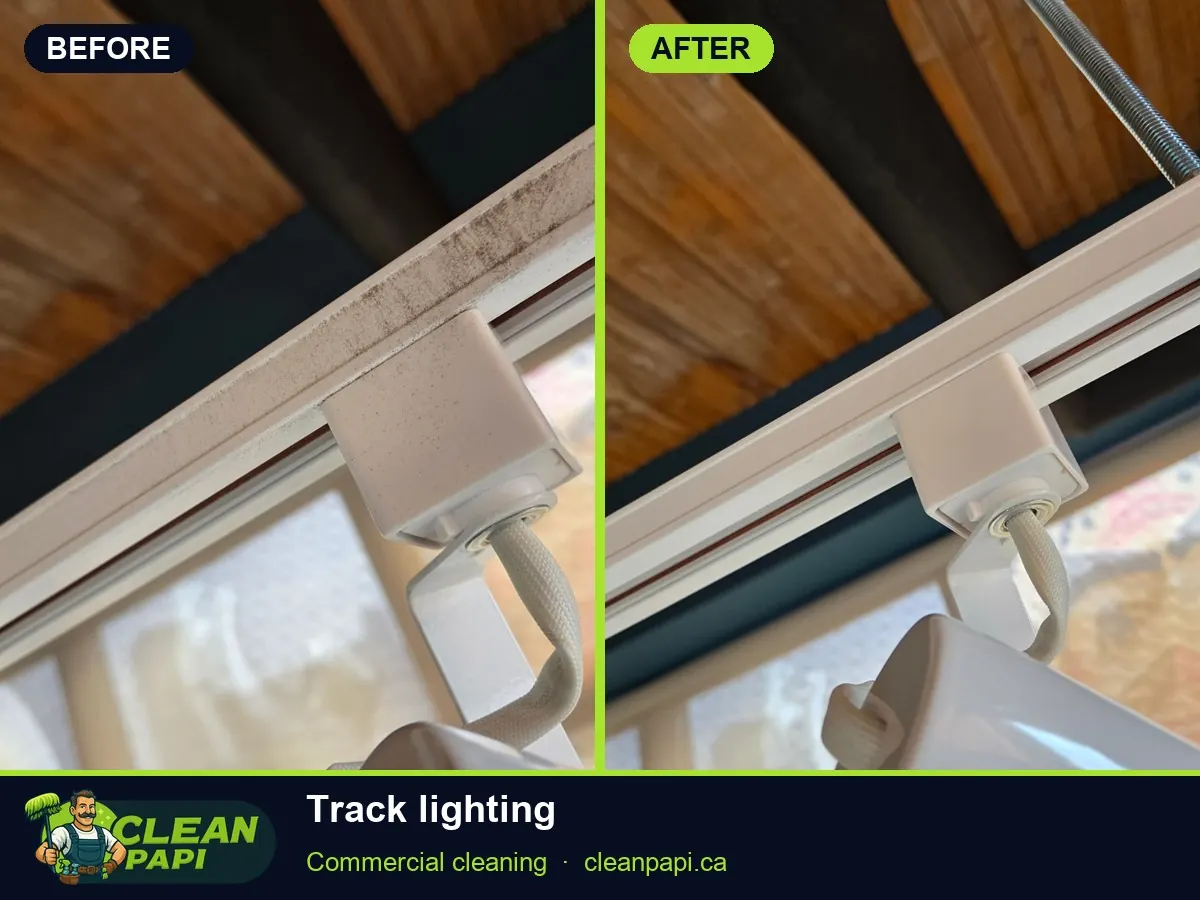
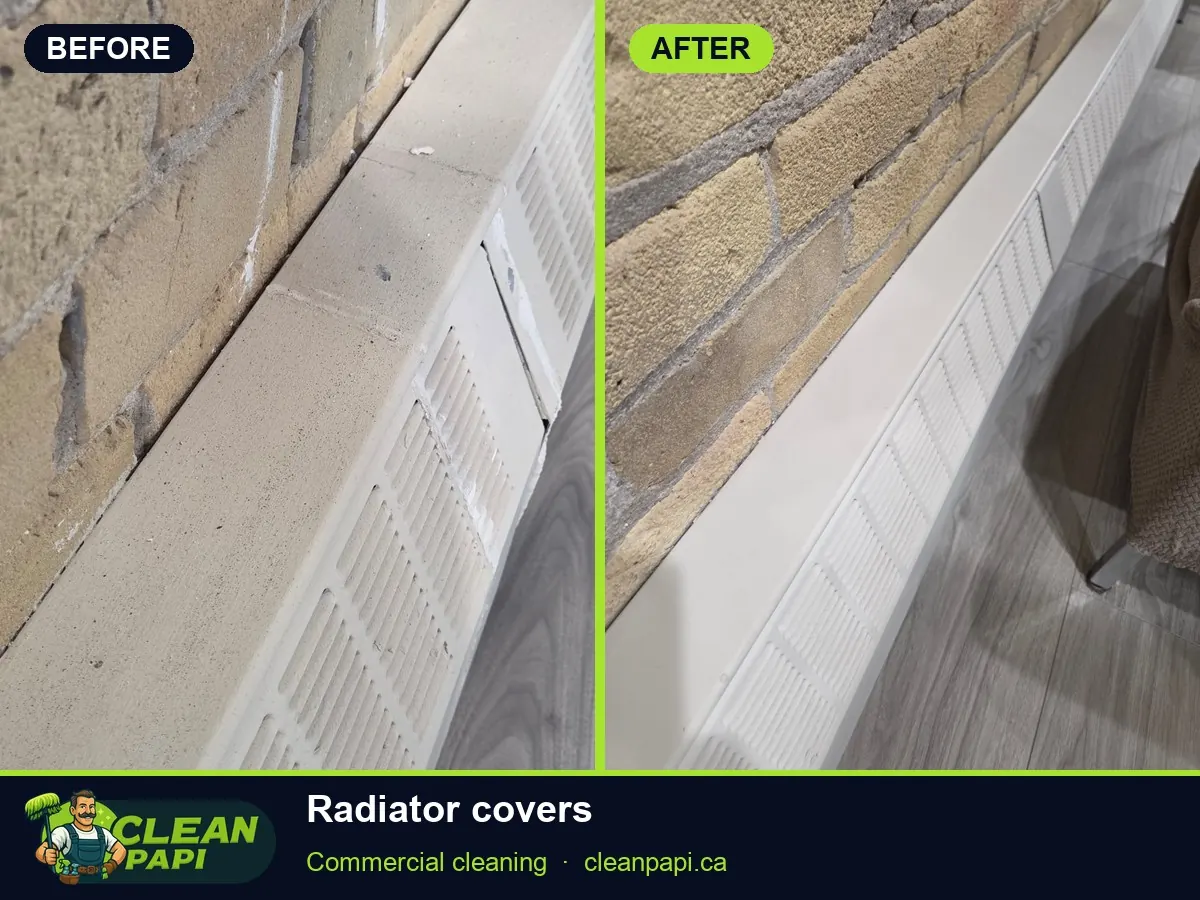
This is the checklist our crews work from in Toronto offices, studios, clinics and shops. The before and after photos in this guide are from Clean Papi commercial jobs. Use it to brief a new cleaner, to check the one you already have, or to keep the office in shape yourself until you hire someone.
How do you use an office cleaning checklist?
"Daily" on most office checklists really means "every visit". If your office is cleaned five nights a week, the every-visit tasks happen daily. If it is cleaned three times a week or once a week, the same list runs on each of those visits, and the weekly and monthly tasks get spread across them.
Three rules make any checklist work:
- Write every task down with the visit it falls on. "Clean the kitchen" means something different to every cleaner. "Wipe counters, sink and appliance fronts every visit, inside of the fridge on the last Friday of the month" means one thing.
- Keep every visit the same length. Rotate weekly and monthly tasks across visits instead of piling them onto one night. Long visits are where tasks get rushed or dropped.
- Decide what your team does and what the cleaner does. Most missed tasks are not skipped. They were never clearly anyone's job. There is a section on that further down.
The lists below follow the order most crews work in: bins and washrooms first, then the kitchen, desks and touchpoints, and floors last, so nothing gets dropped or tracked onto a floor that is already clean.
Daily office cleaning checklist (every visit)
These are the tasks that keep an office usable day to day. If your team notices one of them, it has already been missed.
Bins and recycling
- Empty every garbage and recycling bin, including the small ones under desks
- Put in fresh liners
- Sort organics into the green bin if your building has one
- Take everything to your building's waste and recycling area, sorted the way your building asks
Washrooms
- Clean and disinfect toilets, urinals, sinks and counters
- Clean mirrors, dispensers and flush handles
- Restock paper towel, toilet paper and soap
- Mop the floor, including behind the toilets and under the sinks
Kitchen and break room
- Wipe counters, tables and the sink
- Wipe appliance fronts, the microwave and the coffee station
- Wipe chair seats and the edges of tables, where crumbs and spills collect
Desks and workstations
- Wipe clear desk surfaces around screens and equipment
- Leave papers, files and personal items exactly where they are
Touchpoints
- Door handles and push plates
- Light switches and railings
- Elevator buttons, if your office has its own
- Shared printer and copier buttons
Entrance and reception
- Entrance door glass and frame
- Reception counter and visitor seating
Floors
- Vacuum carpets and rugs
- Sweep and mop hard floors, working back toward the door
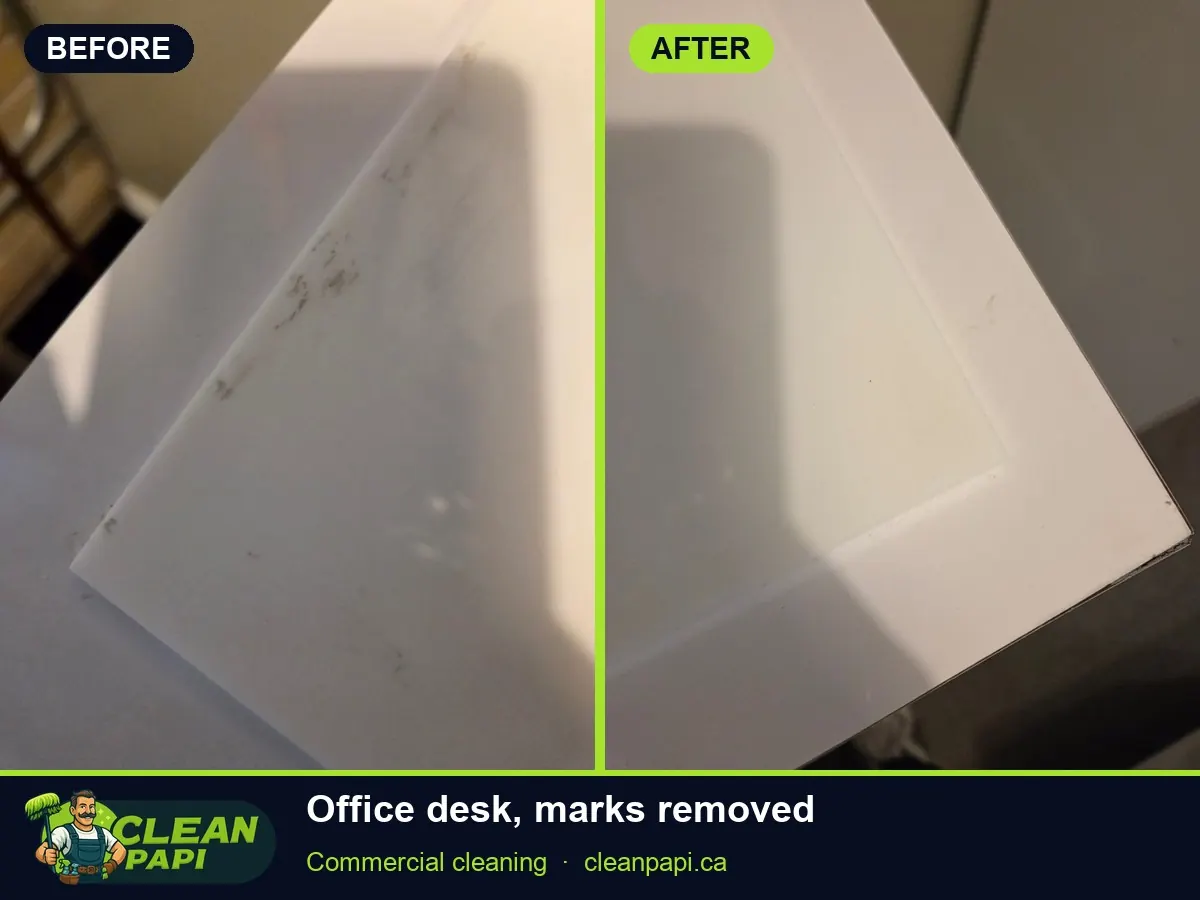
Papi Tip: Desks are where most office cleaning complaints start, and usually the cleaner is not skipping them on purpose. A good crew will not move your papers. Ask your team to clear their desks on cleaning nights, or pick one night a week when desks are cleared and wiped edge to edge.
Weekly office cleaning checklist
Weekly tasks are the details that build up slowly. Skip them for a month and the office starts to look tired, even when the bins and floors are done every night.
- Clean interior glass and glass partitions in full, not just the fingerprints
- Wipe chair bases, table legs and the frames of meeting room tables
- Spot clean walls, doors and switch plates
- Wipe washroom walls, stall partitions and the base of each toilet
- Dust vents, ledges, window sills and shelves within reach
- Vacuum carpet edges, corners and under desks
- Wipe phones, keyboards and shared screens, if your team wants them included
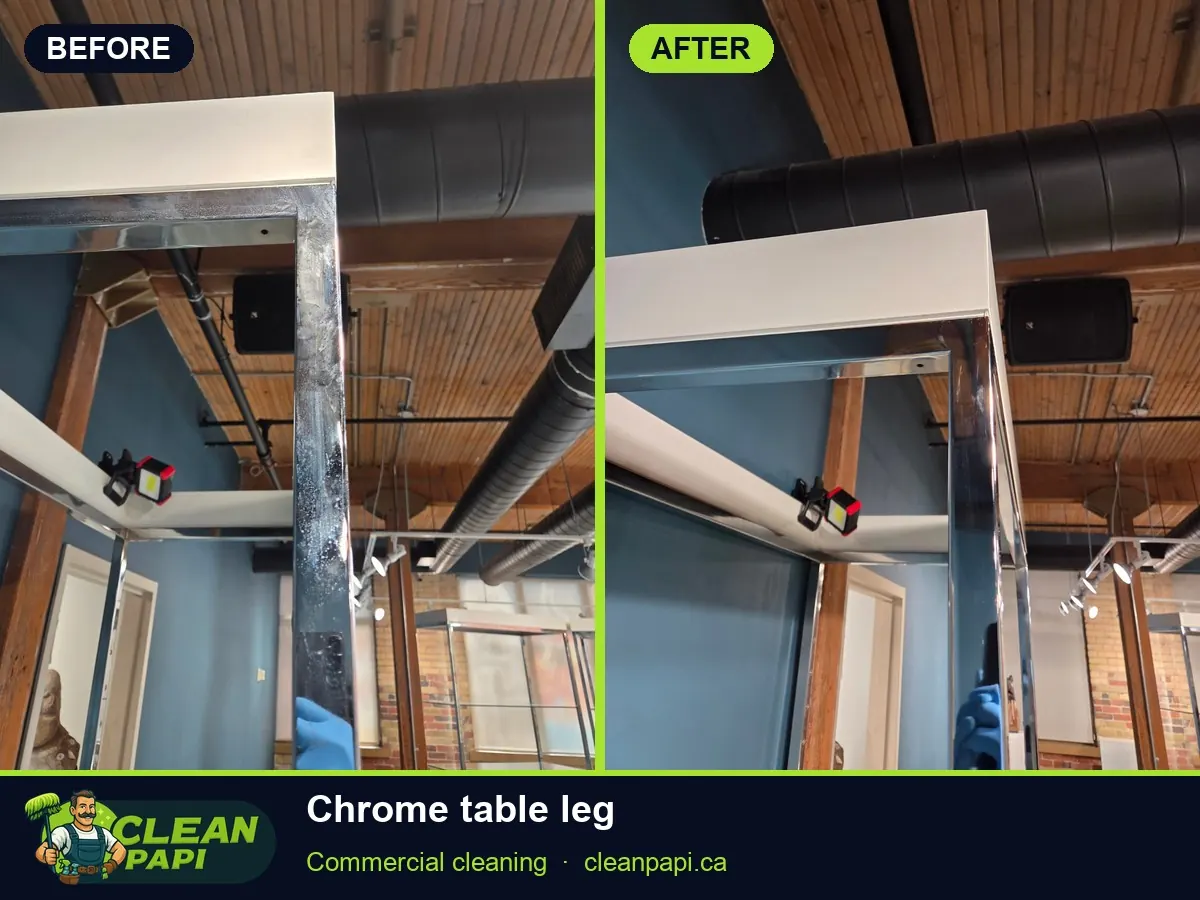
Papi Tip: Ask your cleaner to rotate the weekly tasks across different visits instead of doing them all on one day. Glass on Monday, chair bases on Wednesday, vents on Friday. Every visit stays the same length, and nothing on the weekly list gets dropped because a visit ran long.
Electronics need a clear answer in your scope. Some teams want phones and keyboards wiped every week. Others do not want anyone touching their desk setup. Write it down as a yes or a no, and tell your team which. Screens should only ever be wiped with a dry or lightly damp microfibre cloth, never sprayed directly.
Monthly office cleaning checklist
Monthly tasks are the ones people only notice when they are missed: grey baseboards, dusty door frames, a fridge nobody wants to open.
- Wipe baseboards and door frames throughout the office
- Wipe outlets, cover plates and the cords that run along the walls
- Clean the inside of the staff fridge, on an announced day
- Clean the inside of the microwave in full
- Vacuum upholstered chairs and soft seating
- Wash out the bins themselves
- Dust frame tops, high shelves and light fixtures within reach
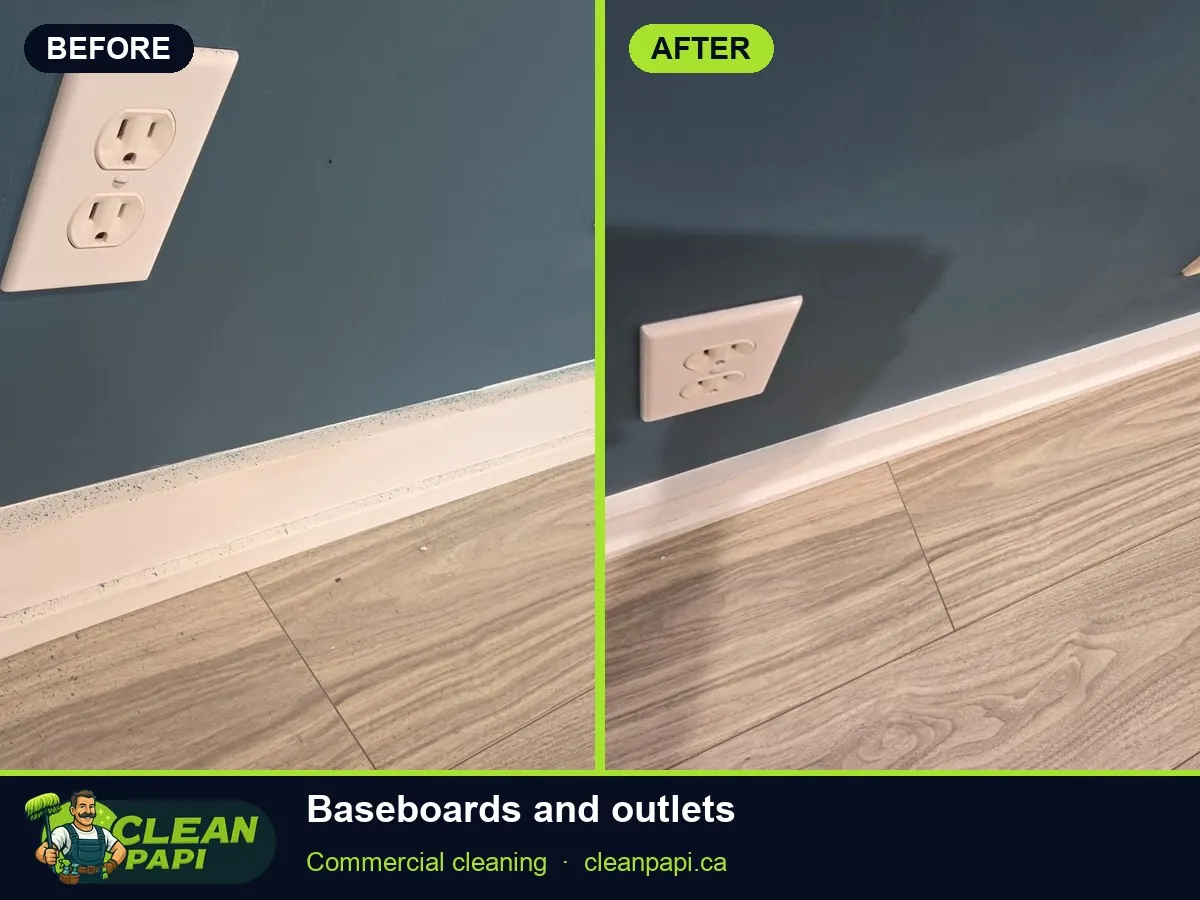
How do you run fridge day without complaints?
The fridge is the one monthly task that needs your team's help. Pick a fixed day, like the last Friday of the month, and put it in the shared calendar. Ask staff to take home anything they want to keep by the end of that day. Anything left behind is thrown out, and the shelves, drawers and door seals get cleaned. A note on the fridge door a few days before saves most of the arguments.
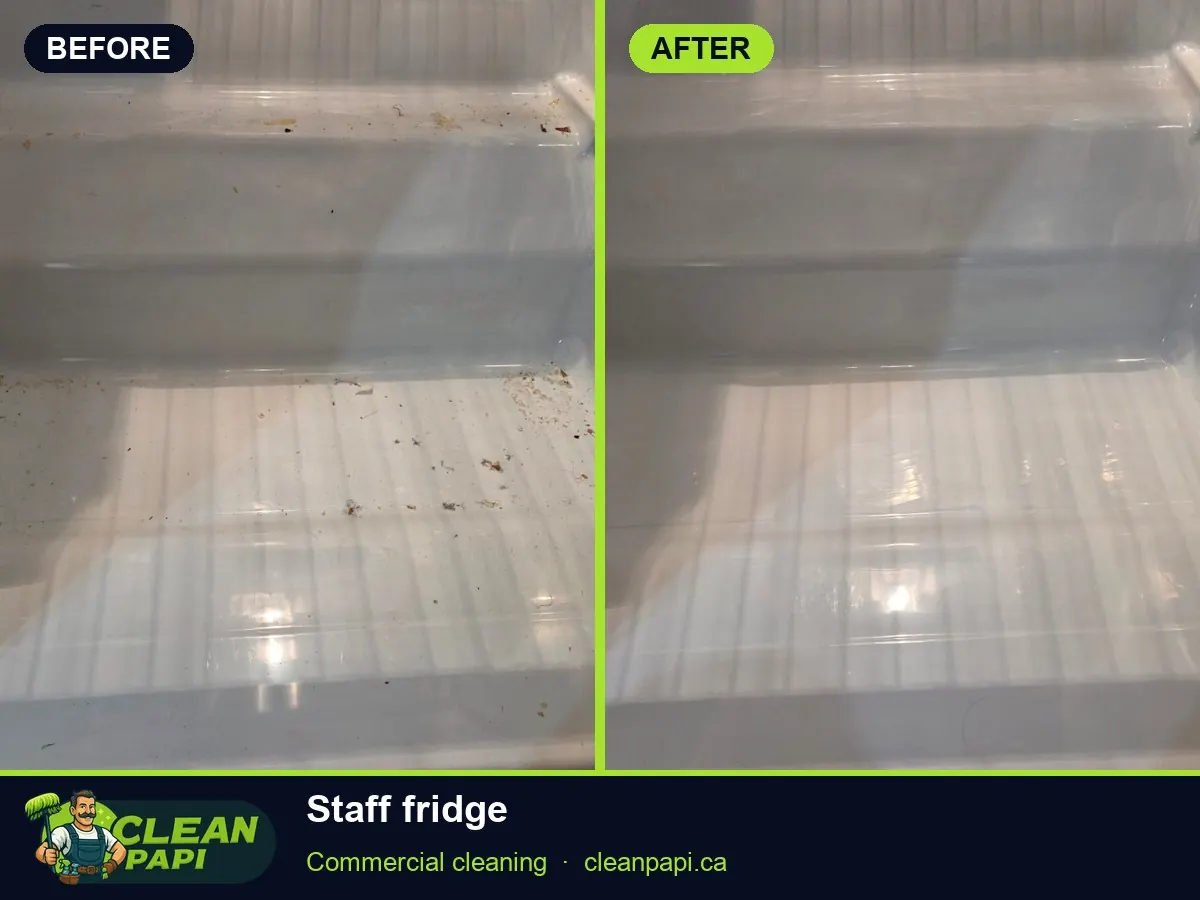
If baseboards, corners and the fridge are already far behind, a one time deep clean resets them before your monthly routine takes over. You can ask for one at the same walkthrough as a regular office cleaning scope.
Quarterly and yearly office cleaning tasks
Most office checklists stop at monthly. The tasks below are why an office that is cleaned every night can still look worn after a year.
- High dusting. Track lighting, light fixtures, vents and the tops of cabinets and partitions. Dust up high does not stay up high. It drifts down onto desks and floors.
- Radiator covers and heaters. Clean them before the heat comes on in the fall. Dust left on a radiator or baseboard heater is what gives an office that burnt smell on the first cold day.
- Inside kitchen cabinets and drawers, once your team has cleared them.
- Washroom detail. Grout lines, tile edges, the tops of stall partitions, and behind and under the fixtures.
- Interior windows and glass in full, including frames and tracks. See our window cleaning page if you want it done on its own schedule.
- Carpet and upholstery shampoo, usually once or twice a year and more often near a busy entrance. We arrange this through a specialist.
- Hard floor care. Stripping and waxing, or buffing, as wear starts to show. Salt season is hard on finished floors, so spring is a good time to look at them.
Exterior windows are usually handled by your building's window contractor, so check with your property manager before you add them to your own list.
Room-by-room office cleaning checklist
If you would rather check the office one room at a time, here is the same checklist sorted by area.
| Area | Every visit | Weekly to quarterly |
|---|---|---|
| Entrance and reception | Door glass, counter, floor, mats | Visitor seating vacuumed, walls spot cleaned, high dusting |
| Desks and open office | Clear desks wiped, bins emptied, floors | Chair bases, partitions, baseboards, outlets |
| Meeting rooms | Table wiped, bins emptied, chairs pushed in, floor | Table frames, glass walls, soft seating |
| Kitchen and break room | Counters, sink, tables, appliance fronts, microwave, floor | Inside the fridge and microwave, cabinets, bins washed out |
| Washrooms | Toilets, sinks, mirrors, dispensers, restock, floor | Walls, partitions, grout and fixture detail |
| Hallways and stairs | Railings, light switches, floors | Baseboards, door frames, walls spot cleaned |
Whiteboards are worth a line in your scope too. Most offices want them left alone, because a wiped diagram from yesterday's meeting is worse than a dusty board.
What changes for Toronto offices in winter?
From November to April, Toronto offices fight road salt and slush. Salt leaves a white film on floors, dulls the finish and wears down grout, and it gets tracked from the entrance into every room.
- Clear salt and slush from entrance floors and lobby mats every visit
- Use a scraper mat outside and an absorbent mat inside, long enough for a few full steps
- Remove salt residue with a salt neutralizing floor cleaner. A regular all purpose cleaner moves the film around without lifting it.
- Swap or wash entrance mats once they stop absorbing. A soaked mat spreads water instead of catching it.
- Dust radiator covers and heaters once the heat is on
If your office has a lot of foot traffic, ask someone on your team to check the entrance at midday on slushy days. Wet floors by the door are a slip risk long before the cleaner arrives that evening.
What does the cleaner do, and what does your team do?
This is where most office cleaning problems start. A crew can only clean what it can reach, and some jobs belong to the people who use the office every day. Agree on these before the first visit:
- Desks. Your team clears the desks they want wiped in full. The cleaner wipes what is clear and leaves the rest alone.
- Dishes. Mugs and plates go in the dishwasher or the sink, not on desks. Many offices ask the crew to load and run the dishwasher. If you want that, put it in your scope.
- The fridge. Your team clears its food before fridge day. The cleaner cleans the empty fridge.
- Supplies. Paper towel, toilet paper, soap and liners are usually bought by the office and kept on site, and the crew restocks from them. Some offices prefer the cleaner to supply them. Either works, as long as it is agreed.
- Shredding. Shredding bins are usually emptied by your shredding company, not the cleaner. Keep confidential papers off desks and out of regular bins.
- Access. Keys, fobs and alarm codes should be handled the way you set out at the start, and only the assigned crew should have them.
- Changes. A room that is now off limits, a new alarm code, a team that moved floors. Tell the cleaner in writing so the scope stays current.
How often should an office be cleaned?
It depends on how many people use the space and how they use it. As a starting point:
- Every weeknight: busy offices, offices with a kitchen that gets used all day, clinics, and spaces where clients walk in.
- Three times a week: mid-sized offices where most of the team is in for part of the week.
- Weekly or every two weeks: small offices and studios with a handful of people.
- Monthly or on request: low-traffic spaces, like an office used a few days a month or a storage area.
Hybrid work changed this for a lot of Toronto offices. If your team is in Tuesday to Thursday, book visits for those evenings instead of a fixed Monday, Wednesday and Friday, so the cleaning lands when the office is actually being used.
Clean Papi offers daily, three times a week, weekly, every two weeks, monthly and on-request visits. Our crews work evenings and overnight, so the office is ready when your team walks in.
What happens at a commercial cleaning walkthrough?
Before we write a scope, we walk the space with you. It takes about 20 minutes and it is free. These are the things we go through:
- Frequency and timing. How often you want visits, and when the space is empty: evenings, overnight or weekends.
- Your current cleaner. If you have one, what they miss. That is usually the most useful five minutes of the walkthrough.
- Washrooms. How many, and the fixtures in each one. Washrooms set how long a visit takes more than anything else.
- Kitchen or break room. Dishwasher, dishes and fridge clean-outs, and who does what.
- Desks. How many workstations, and whether they are usually clear or covered.
- Floors. How much is carpet and how much is hard floor, since each one is cleaned differently.
- Entrance, reception and touchpoints. Glass, counters and the spots everyone touches.
- Supplies and waste. Who supplies paper, soap and liners, and where garbage, recycling and organics go.
- Building rules. Security sign-in, after-hours access, and the key, fob and alarm procedure.
- Insurance paperwork. Whether your landlord or property manager needs a certificate of insurance or WSIB clearance.
We also photograph each area, so the crew sees the space before its first visit. Then you get a written scope that lists every task with the visit it falls on, and a quote for that scope.
How do you make sure the checklist actually gets done?
A checklist only works if it is written down and someone can check it. Before you hire an office cleaner, ask for:
- A written scope that lists every task and the visit it falls on
- A certificate of insurance you can send to your landlord or property manager
- WSIB coverage for every crew member
- Background checks for the people who will have your keys
- A record of each visit, such as a check-in on an app
- A simple way to report a miss, ideally with a photo
Here is how that works at Clean Papi. Our crews work from your written scope and check in on our job app. We carry $2M in commercial general liability insurance, with a certificate of insurance on request. Every crew member is WSIB covered and background-checked. Keys, fobs and alarm codes are handled the way you set out at the walkthrough, and only your assigned crew gets access.
Noticed something after a visit? Tell us, ideally with a photo. We look at it with you, update your scope if it needs it, and make sure the crew covers it on the next visit.
If you need a crew every night, see our janitorial services. For clinics, read how we handle medical and dental office cleaning.
Download the free printable office cleaning checklist
The printable version is two pages, Letter size. Page one has every-visit tasks with a Monday to Friday tick grid, plus weekly tasks by week. Page two has monthly tasks with a "done on" date, quarterly tasks by quarter, winter extras, what your team handles, and space for notes to the crew. Print it, pin it in the supply closet, and you will know at a glance what has been done.
Download the office cleaning checklist (PDF)
Want this checklist turned into a written scope for your office?
Book a free 20-minute walkthrough on our office cleaning page. We will walk the space with you and write every task into your scope with the visit it falls on.
Frequently asked questions
What is included in a daily office cleaning checklist?
Bins and recycling, washrooms and restocking, kitchen counters and the sink, clear desks, touchpoints like door handles and light switches, entrance glass, and floors. These are the tasks done on every visit, whether that is every night or once a week.
How often should office baseboards and vents be cleaned?
Vents within reach should be dusted weekly and baseboards wiped monthly. High vents and light fixtures are a quarterly job. If they are far behind, book a one time deep clean first and keep them up on the routine after that.
Who supplies paper towels, toilet paper and soap?
Usually the office. Our crews bring their own equipment and cleaning products, and restock paper towels, toilet paper and soap from the supplies you keep on site. If you would rather we supply them, we agree on that at the walkthrough.
Does an office cleaner clean the fridge and do the dishes?
Cleaning inside the fridge is usually a monthly task, done on an announced day once staff have cleared their food. Dishes depend on your scope. Many offices ask the crew to load and run the dishwasher, and you can add it in writing.
Can the checklist be changed for our office?
Yes. Every office gets its own written scope after the walkthrough, and you can add or move tasks, such as phones and keyboards, at any time in writing.
Can our office be cleaned at night?
Yes. Clean Papi crews work evenings and overnight, so the office is ready when your team arrives. Visits can be daily, three times a week, weekly, every two weeks, monthly or on request.
Last reviewed November 17, 2026. Photos are from Clean Papi commercial jobs in Toronto.
For offices, clinics and shops
Need a Cleaner for Your Office?
Book a free 20-minute walkthrough. We walk the space with you, then write every task into your scope with the visit it falls on. $2M insured, WSIB covered, background-checked crews.